

Robot Dogs Are Coming to Australian Sport. The Real Question Is Whether We'll Use Them to Our Advantage
By Rose Kelly
28 June 2026
Editorial
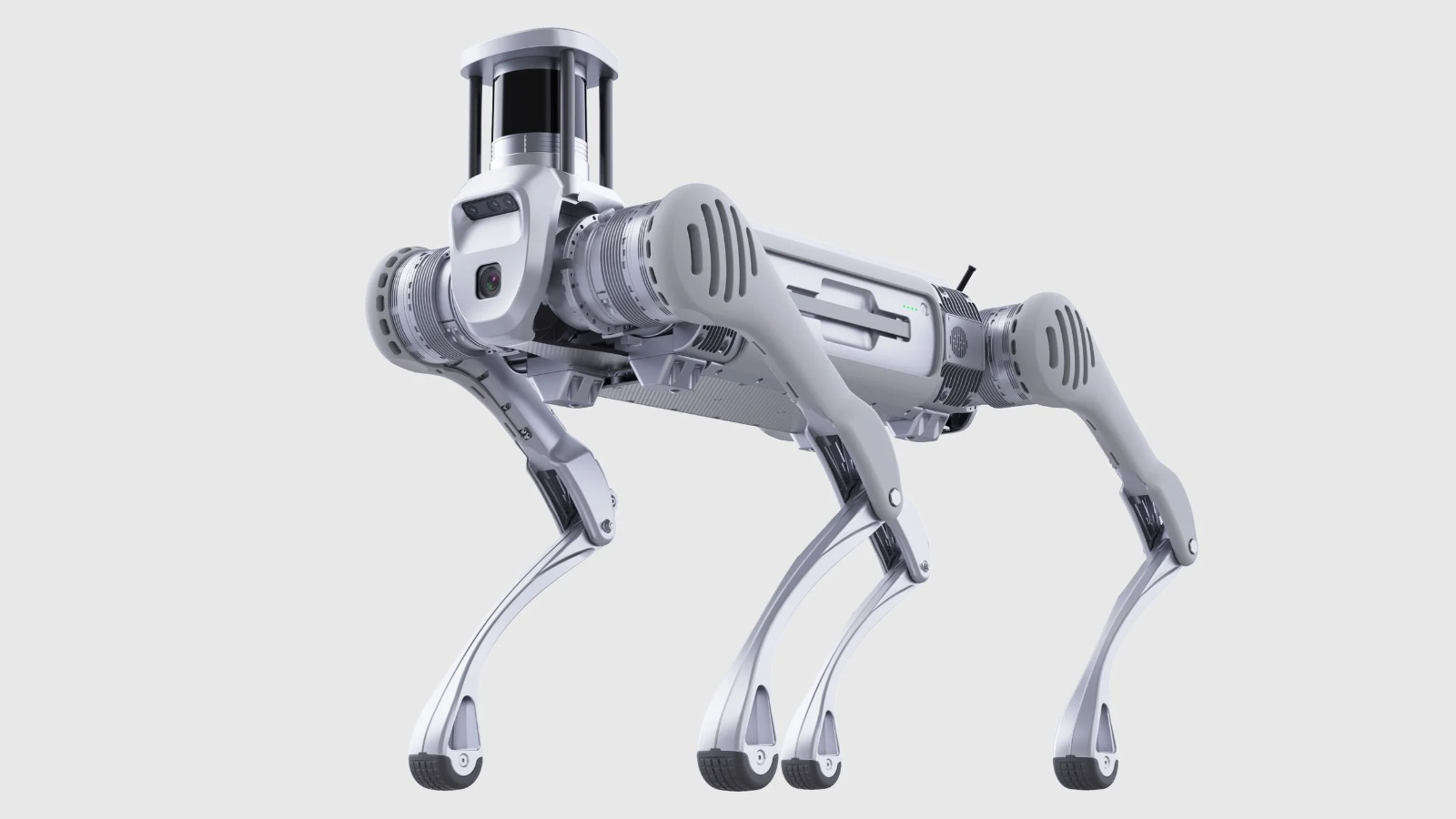
Is this the new face of Australian sport? Image: Quadruped Robot supplied by Boston Dynamics
There is a moment in every technological revolution when the technology itself stops being the story. The internet was once the story. Then social media became the story. Then artificial intelligence dominated the conversation. Eventually, however, the novelty fades and a more important question emerges: once we start using the latest technology, will we use it to its greatest potential?
That question is beginning to confront Australian sport as quadruped robots, better known as "robot dogs", are starting to appearing in high-performance environments.
At first glance, the concept feels almost absurd. Robot dogs pacing the sidelines, gathering insights from angles and positions that coaches, referees and athletes can’t. They aren’t there to replace existing technology but rather to enhance it, adding another layer to the already complex ecosystem of performance analysis.
Prenten AI is an Australian autonomous AI and robotics company preparing to introduce the first quadruped robots into Australian sporting environments. Co-founder Sally Walkom says the technology was originally intended for construction, mining and infrastructure projects, where robots could collect data in environments considered unsafe for humans. Following discussions with Australian sporting icon Anthony Mundine, the company's focus expanded into high-performance sport.
"The quadrupeds can help in sports to understand physics and images, to understand cause and effect in a physical sense," Walkom says. "That can then help a coach predict and simulate outcomes."

Sally Walkom, Co-Founder of Prenten AI. Image supplied
IS THIS AN UNFAIR ADVANTAGE IN SPORT?
When asked whether such technology creates an unfair advantage, Walkom argues that elite sport has long embraced performance-enhancing technology. "For those who want to buy in, it's available to everyone. It's the same as a GPS tracker; it's just the reality now of sport. It's not necessarily about who has access to this or not. It's moved beyond that."
It's true. Australian athletes are already among the most monitored humans on Earth. Elite footballers wear GPS trackers that record every sprint, acceleration and deceleration. Training sessions are filmed from multiple angles. Wearable sensors track workload, fatigue and physiological responses. Teams employ analysts, sports scientists, performance coaches and data specialists whose sole purpose is to turn information into competitive advantage. Against that backdrop, it is fair to ask whether sport really needs a four-legged robot roaming the sidelines carrying cameras, LiDAR sensors and artificial intelligence systems.
The answer depends on whether Australian sport has a data gap or a decision-making gap. For more than a decade, elite sport has operated on the assumption that more information leads to better outcomes. The logic is compelling. If coaches can measure more variables, they should be able to make better decisions. If athletes can be monitored more precisely, injuries should become more preventable. If tactical movements can be analysed in greater detail, performance should improve.
The results, however, have been mixed. Sport has become extraordinarily effective at collecting information. It is less clear whether it has become equally effective at interpreting it.
AUSSIE SPORT AND TECH
Every professional sporting organisation in Australia now sits on vast quantities of performance data. The challenge facing coaches is rarely a lack of information. More often, it is determining which information actually matters. This is where the arrival of quadruped robots becomes interesting. Their advocates argue these machines are not simply another gadget. They represent a new type of mobile sensing platform capable of gathering information from places and perspectives that fixed cameras and traditional wearables can’t. They can move independently through training environments, navigate complex spaces and potentially provide richer views of athlete movement, tactical structures and team behaviour.
Viewed through that lens, robot dogs are not replacing existing technology. They are extending it. Yet even if the technology works exactly as promised, a larger question remains unresolved: will better data produce better sport?
History suggests the answer is not straightforward. The teams that consistently outperform their rivals are rarely those with access to the most information. They are the organisations that build cultures capable of transforming information into action. The greatest coaches are not remembered for the sophistication of their spreadsheets but for making the right decisions at the right moments. Technology can inform those decisions, but it cannot replace judgment.
The distinction matters because elite sport may be approaching a point of diminishing returns in data collection. Every new sensor, camera and analytical platform promises deeper insights and a competitive edge. Yet every additional layer of information can also introduce complexity. More data does not automatically translate into better decisions.
Sam Robertson is Adjunct Professor at the University of Queensland and specialises in athlete tracking, decision-support systems, analytics and human-technology integration. He argues that more data doesn’t necessarily change decisions. “People have been temporal data in sports research for a little while already.” Rather, he says that advanced spatial temporal component of sports research (information that captures where something happens and how it changes over time) is relatively new, and this is where the advantage is. “The visual element allows us to look at why things happened, not just what happened. Meaning we can now use machines to assess risk. Providing these multiple sources of data is pretty much the priority for every team sport in the world at the moment.”
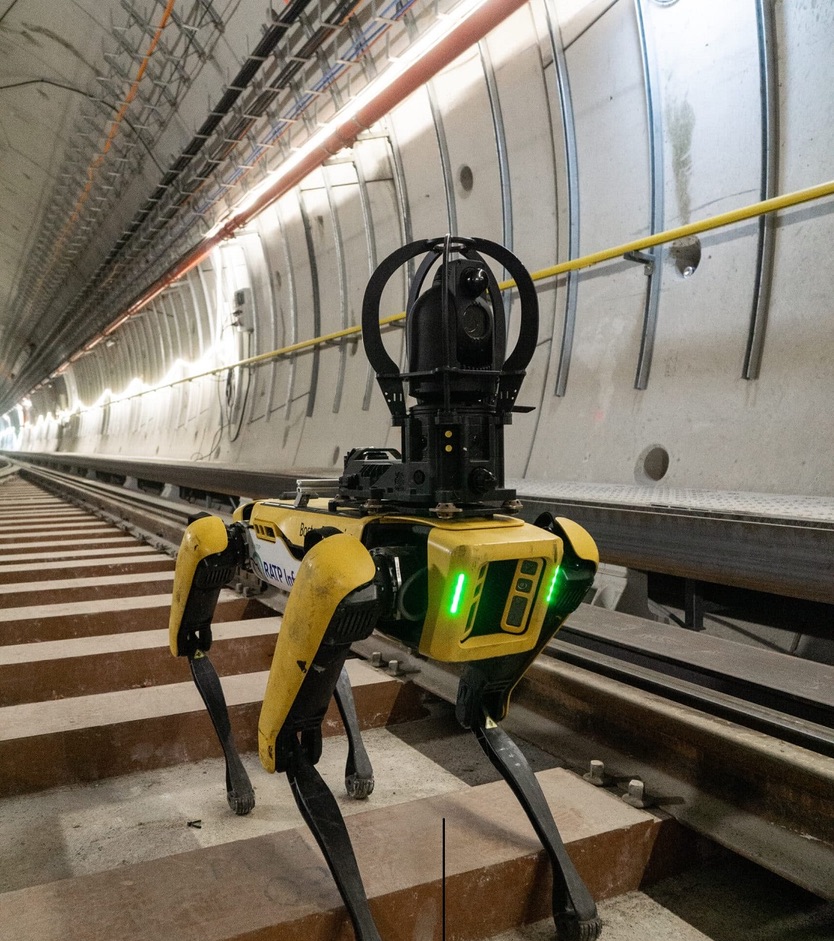
Quadruped Robots originally intended for construction and mining works. Image CR Kennedy
WHO OWNS THE DATA?
The economics of the technology also raise questions. Walkom says Prenten AI intends to lease the quadruped robots for approximately $10,000 per month, including technical support and programming tools. While that figure may be manageable for professional organisations, it is likely to remain beyond the reach of many grassroots clubs and sporting programs.
Then there is the issue of ownership. If robots are constantly collecting information about athletes, training environments and tactical systems, who controls the resulting data?
"One of the fears we are seeing is around where the data capture goes and who owns it," Walkom says. "The answer is that it's captured by the sensors that you individually add, and therefore it's owned by you. We simply own the robot. You own the programming and software."
These questions extend beyond technology. If athletes are increasingly competing within systems designed to quantify every aspect of human performance, how many metrics should determine readiness? How much surveillance is too much? At what point does performance monitoring begin to influence behaviour itself? These are not technological questions. They are human ones.
The arrival of autonomous robotic systems forces decision-makers in sport to confront them more directly than ever before. It also exposes a broader philosophical challenge. Sport occupies a unique place in Australian culture because it celebrates qualities that resist easy measurement. Courage, instinct, leadership, resilience and creativity remain central to athletic achievement despite decades of technological advancement.
DOES DATA GUARANTEE PERFORMANCE?
The most memorable sporting moments often occur precisely because they defy statistical probability. No dataset predicted Cathy Freeman's emotional impact on a nation. No algorithm can fully explain why one athlete thrives under immense pressure while another falters. The danger is not that technology will replace human performance. It cannot. The greater risk is that organisations become so focused on measuring what is quantifiable that they overlook what remains immeasurable.
None of this suggests innovation should be resisted. Australian sport has a long history of embracing new technologies. From sports science programs and biomechanical analysis to advanced recovery monitoring, innovation has helped transform the nation into one of the world's most successful sporting powers relative to its population size.
Refusing to explore emerging technologies would be both naïve and strategically reckless. Nations preparing for Brisbane 2032 are investing heavily in artificial intelligence, robotics and advanced analytics. Australia cannot afford to stand still while competitors move forward. However, innovation should not be confused with inevitability. Every new technology deserves scrutiny, not because progress is dangerous, but because progress without purpose rarely delivers what it promises.
The emergence of quadruped robots in Australian sport feels significant not because of the robots themselves, but because they arrive at a moment when sport must decide whether its next competitive advantage comes from collecting more information or from understanding the information it already has. The technology will undoubtedly become more sophisticated. The robots will become smarter, faster and more capable. The question is whether they help coaches make better decisions, athletes perform better and sporting organisations operate more effectively.
If the answer is yes, their adoption will be justified. If the answer is no, they risk becoming another example of a phenomenon increasingly common across professional sport: technology searching for a problem to solve.
Ultimately, the greatest competitive advantage has never been technology itself. It has always been the ability to understand what the technology is actually telling us. As robot dogs begin walking onto Australian training fields, that lesson may prove more important than any data they collect.
Related Stories
Editorial
This high-end clinic is making Sydney a longevity medicine hub
By Max Reynolds
15 September 2026
Longevity medicine is booming worldwide as people look for cutting-edge ways to stay mentally and physically healthy for longer.
Editorial
The Business of Sleep: Inside the billion-dollar pursuit of perfect rest
By Rose Kelly
29 June 2026
For decades, success was measured by how little sleep you needed. Corporate leaders boasted about surviving on four hours a night. Entrepreneurs wore exhaustion as a badge of honour. Athletes pushed through fatigue in pursuit of marginal gains. Sleep was often viewed as an inconvenience — something that got in the way of productivity.