Black Jet logo iconblack jet logo word mark
Pre-order
Pre-order
Pre-order
Black Jet logo
FAQs
img_arrowright

©2026 Black Jet Mobility Pty Ltd

  • Privacy Policy
  • Terms of Use
  • Report a bug

Flights operated by Black Jet Aviation Pty Ltd (subject to regulatory approval)

©2026 Black Jet Mobility Pty Ltd

  • Privacy Policy
  • Terms of Use
  • Report a bug

Flights operated by Black Jet Aviation Pty Ltd (subject to regulatory approval)

©2026 Black Jet Mobility Pty Ltd

  • Privacy Policy
  • Terms of Use
  • Report a bug

Flights operated by Black Jet Aviation Pty Ltd (subject to regulatory approval)

Have a question
Have a question

Chat with

Loading session...
Have a question

Newsroom

The Sandstones Club

Editorial

Sydney's Members' Clubs: A New Era

By Sophia Kearns

5 August 2026

The Sandstones Club. Image courtesy of The Sandstones Club. For more than a century, Sydney’s private members’ clubs have traded on heritage, exclusivity and old-world prestige. Today, a new generation of clubs is redefining what membership can mean. These spaces are no longer simply places to network over lunch or host clients; they are designed as environments where business, wellness, hospitality and social connection intersect. Leading that shift is The Sandstones Club by Florence Guild, housed within the restored former Department of Lands building in Sydney’s Sandstone Precinct. Here, executive workspaces sit alongside recovery facilities, cultural programming and fine dining, reflecting a broader rethink of what modern private members’ clubs can offer. The club’s interiors embrace a quiet form of luxury. Images released by Sandstones show soaring heritage ceilings, restored sandstone walls, warm timber joinery and leather furnishings, with lounge-style seating and intimate meeting spaces creating an atmosphere that feels closer to a private residence than a traditional office. The design is intended to encourage conversation and connection, positioning the club as a place where members can work, meet, and unwind throughout the day. Inside The Sandstones Club. Image courtesy of The Sandstones Club. The Sandstones Club occupies two floors of The Lands by Capella, one half of Sydney’s restored Sandstone Precinct, a landmark heritage redevelopment by Singapore-based Pontiac Land, which also owns the neighbouring Capella Sydney. Spanning approximately 3,500 square metres, the club is among the city’s largest private membership clubs, with annual memberships reportedly costing around $30,000. At the centre of the offering is Spezia, said to open this winter, a 140-seat Italian restaurant led by executive chef Jae Bang, alongside a wellness floor built around recovery and cognitive performance and a suite of private offices for members. The project represents Florence Guild founder Soren Trampedach's largest venture to date. Over the past decade, the company has built its Work Club network across Sydney, Melbourne and Canberra before expanding into a club designed specifically for senior executives, founders and business leaders rather than a broader professional community. The club's interiors blend heritage detailing with contemporary design. Image courtesy of The Sandstones Club. A similar philosophy underpins The Pillars, a members’ club that opened at 11 Barrack Street in May 2025. Its founders have spoken about creating a space for established business leaders, arguing that while there are many communities designed for people building their careers, there are fewer tailored towards those who have already reached senior levels of business. That approach also aligns with Tim Gurner’s wellness-focused Saint Haven, which combines luxury fitness, recovery and hospitality in a membership model aimed at high-performing professionals. While each club has its own identity, they reflect a shared shift in expectations: networking remains part of the appeal, but it now sits alongside wellness, cultural experiences and flexible workspaces. The rise of these clubs also reflects a broader change in how professionals think about work and connection. As remote and hybrid working arrangements have become more common, traditional offices are no longer the only places where people build networks or establish routines. In their place, private clubs are offering a more curated environment, one that combines the productivity of a workplace with the social rituals of hospitality and the personal benefits of wellness. The Sandstones Club occupies two floors of the heritage Department of Lands building. Image courtesy of The Sandstones Club. These venues aren't built for a quick meeting. They're designed for members to spend real time in, working, socialising, recovering and connecting, all inside the one environment. The Sandstones Club’s programming extends beyond dining and networking, with a calendar of talks and conversations designed to bring members into contact with leaders across business, law and public life. Recent events have included a discussion between human rights lawyer Jennifer Robinson and Soren Trampedach exploring leadership, judgement and decision-making under pressure. These events reflect the club’s broader ambition to create opportunities for members to engage with influential figures and ideas beyond traditional business networking. Of course, private members’ clubs are not new to Sydney. The Australian Club, founded in 1838, remains the oldest private members’ club in the Southern Hemisphere, built around tradition, discretion and longstanding social connections. What is changing is not the appeal of exclusivity itself, but what membership now promises. The Sandstones Club, housed within the restored Department of Lands building. Image courtesy of The Sandstones Club. The new generation of clubs has expanded the definition of belonging. Heritage and networking have been joined by wellness, curated experiences and thoughtfully designed environments that reflect changing attitudes towards work and leisure. It is also no longer a category defined by a single institution. Sandstones, The Pillars and Saint Haven each represent different interpretations of the modern members’ club, while continued speculation around international operators such as Soho House suggests Sydney remains firmly on the radar of global brands. Exactly where the sector goes next remains to be seen, but the recent wave of openings points to growing demand for premium spaces that bring together work, hospitality, wellbeing and community under one roof.

Silvana Calil and Manolo Lopez Wild Legs Wine Bar Room by Lexie Mamo

Editorial

Curators of the Obscure: How Wild Legs Turned a Small Wine List Into Brisbane’s Biggest Draw

By Lexie Mamo

29 July 2026

Silvana Calil & Manolo Lopez at Wild Legs Wine Room, Newstead. Image credit: Lexie Mamo   Twenty metres off the coast of Western Australia, Shiraz is ageing in a concrete egg on the ocean’s floor. Gently rolled by the tide, the temperature plays its part in ageing this wine, producing an entirely unique result. If this Subsea Estate wine process is news to you, that’s no surprise. However, it’s just another day in the life for Silvana Calil and Manolo Lopez, curators of the obscure in the wine world.   Silvana pours Subsea Estate Shiraz. Image credit: Lexie Mamo   The power-couple duo behind Adela Wine Bar and its newer, little sister venue, Wild Legs Wine Room, Silvana and Manolo are masters of the warm welcome and the curation of a wicked wine list. A charismatic space for European-leaning share plates, unusual wine and some of their favourite winemakers, Wild Legs began as an opportunity to push their trademark hospitality one step further.   “It just made sense. We could take everything we had learned at Adela and push it a little further. The unpretentious wines, the ones people had never heard of, unusual grapes, unheard of winemakers and all the craziness that came with our vision,” shares Silvana.   Despite the unusual winemakers and sometimes unpronounceable varietals, Newstead’s friendliest oenophiles use warm hospitality as a safeguard against pretension, breaking down the barriers between entry-level vino enthusiasts and wine connoisseurs.    When asked about Wild Legs' personality as a venue, Silvana maintains that the venue has an energy of its own, fostered by their laidback approach and tight-knit community of neighbours, regulars and new friends.   “Wild Legs is sassy, a little cheeky and does not take itself too seriously. We love wine, but we are not here to make anyone feel like they need a translator before ordering a glass." "You can know everything about wine, or absolutely nothing. You can talk to us about what is in your glass, or just point at something because the label has a dog or some weird picture on it and hope for the best. We can do both!”   Making the wine knowledge and attention to detail a fraction easier is the tight wine list. Whereas many other wine bars around Brisbane focus on bigger, grander, and more expansive wine lists, keeping things condensed is part of the strategy here. Manolo and Silvana take pride in their relationships with winemakers, with many long-term partnerships under their belt from their years spent travelling, exploring and constantly pushing the envelope when it comes to wine. “If the list gets too big, things start getting a bit blurry. We like to know the wines we pour, the people who make them and, ideally, have met them too. Keeping the list small means we can stay close to the wines, change things up often and actually talk about what is in your glass. Otherwise, we would need a spreadsheet, and nobody wants that at dinner.”   It’s this type of unfussy, considered and human approach that makes Wild Legs a natural choice for Brisbane locals, with patrons spilling out over the pathway from the venue’s tiny nook on Wyandra Street. Word of mouth is the primary driver of new patrons here, with an irrepressible “if you know, you know” quality that has become part of the venue’s DNA. Silvana shrugs this off as a natural evolution, not necessarily a marketing approach. “We’re not trying to be the trendy or cool place that everyone needs to know about. We just want to give people an unpretentious experience and treat them like friends. If they enjoy it and come back, that is enough for us."   "People keep telling us how cosy and intimate Wild Legs feels. We have heard a few times that it is the perfect spot for a first date, or dinner for two before a romantic ending. We find that pretty funny.” Wild Legs Wine Room. Image Credit: Samantha Wooller   With Locals Nights on Wednesdays growing in popularity (once a walk-ins-only destination, now books out for Wednesday night dinner weeks in advance). Events aren’t a rarity here, with trivia nights joining the roster in September and private functions taking over the indoor space, perfect for birthdays, mixers or work functions.   Twenty metres down, that Subsea Estate Shiraz has no say in how it turns out; the tide and the temperature make that call. Similarly, Manolo and Silvana have taken a chance: a tight wine list, unfamiliar varietals, and obscurity over familiarity.   But where that wine carries a risk, the hospitality never does. That’s the trade that Wild Legs took a bet on, and Brisbane keeps coming back for it. Additional Images:
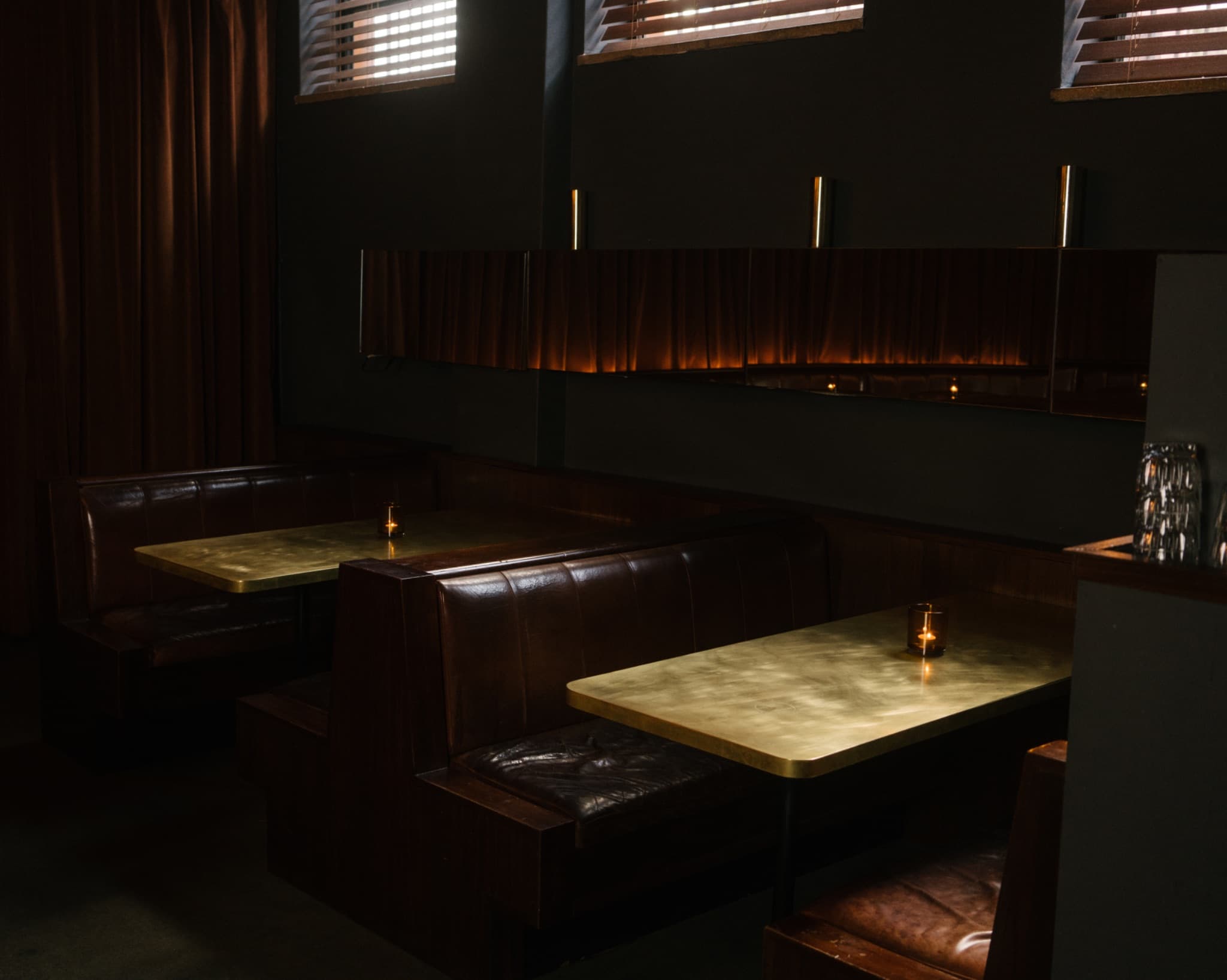
The bar at Golden Age Cinema and Bar, with its intimate booth seating and low-lit atmosphere. Photo: Golden Age Cinema and Bar

Editorial

An Evening at Golden Age: Sydney's Best-Kept Screening Room

By Sophia Kearns

20 July 2026

Golden Age Cinema and Bar, Surry Hills. Photo: Golden Age Cinema and Bar There's a particular change of atmosphere that happens the moment you step off a Surry Hills street and down a narrow staircase into somewhere else entirely. At the bottom of it, Golden Age Cinema and Bar reveals itself slowly: low light, dark timber, deep velvet, and the smell of fresh popcorn threading through a room already full of people leaning into conversation over cocktails and wine. It's the kind of room you could sit in without ever intending to see a film, and plenty of people do. Walk-ins are welcome for smaller groups, and the kitchen runs every night from 5 pm until late, with a seasonal menu built for lingering rather than rushing. There's a Golden Hour each evening, negronis, Manhattans and arancini, and a running series of cocktails created specifically around whatever's on screen that week. Alongside a proper dinner menu, there's a candy bar built for the cinema itself: cocktail popcorn in salted, Sichuan chilli, or cinnamon sugar; mapo choc-tops; smoked almonds; and marinated olives, all to be carried straight in with you. The two rooms never feel entirely separate, more like one long evening that happens to move underground for a couple of hours.   A few plates from the evening menu, alongside a glass of wine at Golden Age's bar. Photo: Golden Age Cinema and Bar. I moved into the cinema, a fully booked, intimate room already buzzing before a single trailer had played. Ten minutes of previews rolled through what was screening and what was coming next, and it became clear fairly quickly that this isn't a place chasing the next blockbuster. It's somewhere for people who want to sit with a favourite classic, follow an award-winning film from somewhere else in the world, or catch a niche pick: a documentary on an artist they admire that no multiplex would ever think to program. Somewhere to land after a day of work, properly leaving the city above you. That night, the pick was The Lost Record, a sci-fi rock-and-roll essay-fantasy about art, music, and obsession, directed by Ian Svenonius and Alexandra Cabral. Before it started, Svenonius came out to speak to the room, unpolished and unhurried, to introduce his film and express how he felt “heartened” by just how full the cinema was. It was a small moment, but it set the tone for the whole evening: this is a place built around ritual, not simply programming. The film itself is set in a dystopian near-future where the state dictates what music can be heard. It follows a woman who stumbles on an unsanctioned record in a junk shop, one that's never been played, promoted or approved, and begins something closer to a relationship with it than a fascination. Part fantasy, part essay on art and obsession, part something harder to categorise, it's the kind of film that asks you to meet it entirely on its own terms rather than easing you in. It's an acquired taste, and one I'll admit I hadn't quite acquired, but it's also exactly the sort of thing you wouldn't stumble across anywhere else, which felt like the point. The room shifted the moment the credits rolled. Chairs emptied fast, the crowd drifting back toward the bar for one more drink before Escape-ism, Svenonius and Sandi Denton's minimal rock and roll project, took the Golden Stage. The sound was stripped-back and repetitive, beat machine and bass line under Svenonius's voice, low and deadpan one moment, high and passionate the next, the kind of music that made people want to move rather than just listen. A few songs in, people had left their seats behind and started dancing near the stage. The film simply gave way to the band, and the night carried on. Escape-ism performing live on the Golden Stage. Photo: Sophia Kearns The building carries its own weight through all of this. Golden Age sits in what was, from 1940, the Sydney home of Paramount Pictures, the same theatrette that once screened newsreels to servicemen and women during the Second World War. The 1940s velvet chairs were sourced from Zurich, Switzerland, specifically to preserve that period’s feel, and the projection room still holds vintage equipment, even though screenings now run digitally. Sitting in it, none of that history feels like decoration. It's simply the frame the whole night hangs on. The theatrette in its Paramount Pictures days, screening newsreels to servicewomen during the Second World War. Photo: Golden Age Cinema and Bar What makes Golden Age worth returning to isn't any single film, but the range on offer and the clear sense that whatever's screening, someone has actually chosen it. This month alone, the program runs from Ildikó Enyedi's Cannes-winning Silent Friend to Sion Sono's cult classic Suicide Club, a 25th anniversary screening of Amélie, and a season dedicated to Jean-Pierre Jeunet's work, alongside a genuine Australian premiere. It's also worth noting that one of Sydney's more unusual venues is available for hosting, not simply visiting. Golden Age takes private bookings across both the cinema and the bar, either separately or together, for anything from an intimate dinner and private screening to a product launch or an evening built entirely around one film chosen for the occasion. With seating for up to 56 in the cinema and 42 in the bar, it suits a genuinely private gathering far better than a hired-out restaurant floor or a generic function room ever could: an evening with real atmosphere already built in, rather than one you have to manufacture from scratch. For anyone looking to mark something properly, whether a milestone birthday or a small celebration among close friends, without reaching for the obvious, this is exactly the kind of room that does the work for you. The bar at Golden Age Cinema and Bar, with its intimate booth seating and low-lit atmosphere. Photo: Golden Age Cinema and Bar   Image credits: Image 1: Photo courtesy of Golden Age Cinema and Bar Image 2: Photo courtesy of Golden Age Cinema and Bar Image 3: Photo courtesy of Golden Age Cinema and Bar Image 4: Photo by Sophia Kearns Image 5: Photo courtesy of Golden Age Cinema and Bar Image 6: Photo courtesy of Golden Age Cinema and Bar

My Mum Made It SS26 Trousseau Dress

Editorial

5 Australian Designers to Have on Your Radar

By Orion Scott

19 July 2026

It’s no secret that when it comes to understated style excellence, Australians sit up there on the list.   Effortless, chic, and rich with resort-like glamour, Down Under fashion has caught the attention of some of the world's most notable names for decades, and rightfully so. From Hailey Bieber and Kaia Gerber to Bella Hadid and Dua Lipa, the most cultivated IT girls from around the globe know a good thing when they see it, and more often than not, it happens to be Australian designers.   On the forefront, brands such as Zimmermann, Christopher Esber, Rebecca Vallance, Aje, | Alémais and Bec & Bridge have all secured themselves a spot in the wardrobes of the aforementioned, donned to lavish red carpet events, Hollywood premieres, sun-soaked vacations and everything in between.   These brands might have made a formidable, lasting mark on the industry, their influence unmatched and creative brilliance utterly enviable, but it seems there are a few up-and-coming contenders on their way to doing the same.   From Melbourne-based made-to-measure to Sydneysider silhouettes, we take a deep dive into some of the nation's most talked-about designers and brands to have on your radar right now. If we know anything, it’s that Australia is really good at producing cutting-edge creatives, and the list below is proof of just that.     Karlaidlaw Karlaidlaw Circus Pant in Marone/Red   IYKYK. It’s hard to walk down any street in Melbourne's inner north without seeing something from Karlaidlaw adorned on the frame of a fashionable city stomping resident, making it arguably one of the hottest labels to know right now. Described as a streetwear brand that “indulges in the experimental”, Karlaidlaw is for the visionaries who wear their creativity on their sleeve. Vivacious velvet sweatpants (if they’re not sold out), crop cut-out hoodies, barely there basics, and sequins galore, Karlaidlaw is Charli XCX personified. karlaidlaw.com/   My Mum Made It My Mum Made It SS26 Trousseau Dress Brisbane-born brand My Mum Made It is the definition of ‘whimsy-maxing’, and that’s exactly why we love it. Fresh out of school and on a mission to create something new out of something old, founder Nyree Leckenby took to her mum's sewing machine with an old bed sheet, and the rest is history. With a belief that “nothing beautiful should ever be discarded”, Nyrere has made a conscious effort to only produce in small, considered batches, prioritise natural fibres, and minimise waste by giving new life to offcuts in the form of practically perfect purses, berets, brooches and other small accessories. mymum-madeit.com/   Commas Commas Island Embroidery Bowling Shirt   If relaxed silhouettes, calming tones and carefully crafted textures are your thing, then menswear label Commas needs to be on your radar. Founded in 2017 by Richard Jarman and inspired by a deep connection to the ocean, Commas is the answer to making modern menswear uncomplicated. Just like its name, Commas and its product range invite wearers to stop, take a breath and appreciate the world around them. https://commas.cc/       Emily Watson Emily Watson Tankini Skirt and Top in recycled Lycra from the ‘All Stars’ collection   If it’s good enough for Miss Bella Hadid, then you best believe it’s good enough for us! Founded in 2020, Emily Watson has effortlessly captured the essence that is ‘cool girl’ Australian style, blurring the line between traditional swimwear and avant-garde excellence. Frills, figure-hugging cuts, cropped hemlines, and vibrant hues are all synonymous with the Brunswick-based brand, so if you like something a little bold and don’t mind being stopped on the street to answer questions about where you got your outfit, Emily Watson is your gal. emilywatson.co/   Studio Marlene Studio Marlene The Marlene Shirt in Black Identifying as more of a project than a brand, Studio Marlene and its business model are most definitely an interesting one. Rather than producing seasonal collections of multiple garments like traditional fashion houses, the Melbourne-based label focuses on just two items- albeit both exceptional in every way. Not only does the small product selection make securing a piece feel like the ultimate fashion flex, but you can also rest assured that considered design is at the forefront of everything Studio Marlene does. studiomarlene.com/

Founder of The Domestic Collective, Anthea Strachan

Editorial

Built Different: Why Australia's Most Successful Entrepreneurs Ignored the Rulebook

By Rose Kelly

9 July 2026

Founder of The Domestic Collective, Anthea Strachan. Image supplied   There is no shortage of advice on how to build a successful business. Every week, a new book, podcast or social media post promises the secret to entrepreneurial success, often wrapped in a familiar formula of bigger risks, longer hours and relentless ambition. Yet spend time with people who have actually built enduring businesses, and it quickly becomes clear that success rarely follows a predictable path.   Three of Australia’s top entrepreneurs, Peter Lynch, Antony Karp and Anthea Strachan have each built impressive businesses in vastly different industries. Lynch has spent decades reshaping Australia's travel media landscape, continually adapting his business to stay ahead of seismic shifts in publishing and technology. Karp has built, led and advised high-growth companies, earning a reputation as one of Australia's most respected strategic advisors through his work helping businesses navigate transformation and growth. Strachan, meanwhile, has created a thriving residential and commercial services company with a strong social purpose at its heart, proving that commercial success and meaningful community impact can grow side by side.   On paper, there is little that connects the three. One works in media, another in corporate strategy, the third in the cleaning industry. Their businesses serve different customers, operate in different markets and have been built in entirely different ways. Yet beneath those differences lies a common thread. None of them followed a conventional path. None of them built their business by copying someone else's model. Instead, each developed a distinct philosophy of leadership, shaped by experience, resilience and a willingness to trust their own instincts.   For Lynch, success has meant constantly reinventing both his business and himself in an industry that refuses to stand still. For Karp, it has come from disciplined execution, accountability and understanding that even the best ideas amount to little without exceptional leadership. For Strachan, entrepreneurship has become a vehicle for creating opportunities for others, building a business that measures success not only by growth, but by the positive impact it has on people's lives.   Their stories are different, but together they challenge one of the biggest myths in business: that there is a single blueprint for entrepreneurial success. If there is one lesson these three founders share, it is that the most successful businesses are rarely built by following the rulebook. More often, they are built by having the confidence to write your own.     The Reinventor - Peter Lynch Peter Lynch, Media and Publishing Entrepreneur. Image supplied   If there is one quality that defines Peter Lynch's career, it is curiosity.   Over four decades, he has held senior media roles in London, Hong Kong, Singapore and Australia, witnessing first-hand the transformation of an industry that has arguably changed more than almost any other. Newspapers have become digital platforms, print deadlines have given way to the 24-hour news cycle, and artificial intelligence is rapidly reshaping the way audiences consume information. Through every wave of disruption, Lynch has done what successful entrepreneurs often do best: adapt before he has to. It wasn't until two decades ago, however, that he decided to channel those years of experience into building something of his own.   "I'd spent my career reinventing businesses or creating new products for other people," he says. "In my last corporate role, I'd already worked out how I wanted to start my own business. When the company asked me to stay, it was a difficult decision. I could have continued climbing the corporate ladder, but I knew it was time to back myself."   That decision became Big Splash Media, the publishing company behind Cruise Passenger, Sydney Travel Guide and a growing portfolio of travel brands. Looking back, Lynch still smiles at one small detail from that moment in time. As a farewell gift, his team presented him with a logo for the new business. More than twenty years later, the same logo remains the face of Big Splash Media.   For many business leaders, success is built on having a long-term strategy. Lynch agrees, but believes the real challenge lies in recognising the small changes that gradually reshape an industry before everyone else notices them.   "People often talk about a lightning-bolt moment where everything changes," he says. "The reality is there isn't one. In business today, you can have two 'aha' moments before lunchtime. What you really have to watch for is creeping change. Those small shifts in customer behaviour or technology that don't seem significant at first, but eventually change everything."   That philosophy has become even more important as artificial intelligence begins to reshape publishing. Rather than seeing AI as a threat, Lynch views it as another evolution that good businesses must learn to understand.   "I'm still a news addict," he says. "Years ago, I started every day by reading newspapers from around the world. Now I'm reading about AI, digital marketing and the attention economy. I listen to podcasts, follow industry leaders and spend a lot of time talking to our clients because they're often the first to see changes in consumer behaviour."   For Lynch, listening has become one of the most underrated leadership skills. He believes successful businesses need to balance two equally important relationships: understanding their audience while never losing sight of the commercial realities that sustain the business.   "We have two masters," he explains. "Our readers and our clients. Keeping both happy is what makes the business work."   His willingness to embrace change has also shaped the way he thinks about leadership. While many established media companies struggled to adapt to digital disruption, Lynch believes the greatest risk is assuming today's success guarantees tomorrow's relevance. "If you want to know why so many big media brands disappeared," he says, "it's because they believed they had earned the right to people's attention. You never earn it permanently. You have to earn it every day."   It is perhaps the most valuable lesson of his career, and one that extends far beyond publishing. Markets evolve, technology advances and customer expectations continue to shift. Businesses that stop listening inevitably fall behind.   For anyone considering launching their own venture, however, Lynch's advice is surprisingly measured. He rejects the popular narrative that everyone should aspire to become an entrepreneur. "There's absolutely nothing wrong with being exceptional at your job and deciding that's where you're happiest," he says. "Entrepreneurship isn't for everyone, and it shouldn't be."   For those who do choose the path, his advice is simple: begin with the end in mind. "Know why you're building the business. Is it to create a lifestyle? Is it to scale? Is it something you eventually want to sell? Those answers shape every decision you'll make."   After decades of navigating uncertainty, building businesses and embracing change, Lynch's own definition of success has remained remarkably consistent.   "Happiness," he says with a smile. "That's still my definition of success."     The Catalyst - Antony Karp   Antony Karp, Founder and Director of Tonka Group. Image supplied.   Where Peter Lynch sees patterns, Antony Karp sees potential. Over the course of his career, Karp has built, led and transformed businesses across multiple sectors, developing a reputation as one of Australia's most respected business leaders and strategic advisors. Today, as Founder and Director of Tonka Group, he works with companies on strategy, operational improvement, business transformation and growth, helping organisations navigate the opportunities and challenges that come with scaling.   Despite an impressive career that includes leading businesses valued in the hundreds of millions of dollars, Karp rejects the idea that he always dreamed of becoming an entrepreneur.   "I wouldn't say I had a passion for being an entrepreneur," he says. "I was never comfortable in a status quo type of job."   That mindset has shaped every stage of his career. While others were content maintaining what already existed, Karp found himself drawn to improvement, identifying opportunities, challenging assumptions and pushing businesses to evolve. He traces that instinct back to his first job, working in his father's sporting goods store as a teenager, where he was constantly looking for ways to outperform expectations. "I just wanted to win," he says with a laugh. "From there I learned how to pivot towards opportunities. Sometimes I got the timing wrong, but I hated the idea of not succeeding, so I kept going until we did."   That determination would become one of the defining characteristics of his leadership style. Success, he believes, rarely comes from having the smartest idea in the room. More often, it comes from having the discipline to execute it well.   When asked what separates businesses that continue to grow from those that plateau, Karp's answer is immediate. "Passion," he says. "Companies that genuinely believe they can grow, and have a strategy that supports that growth, will succeed. The ones that rely on what worked last year, or assume they're entitled to their market position, are the ones most at risk."   For Karp, however, passion is only effective when it is paired with self-awareness. One of the biggest mistakes he sees among founders is believing they have all the answers. "Founders often think they're good at everything," he says. "The reality is they're usually exceptional at one or two things. The best leaders understand their blind spots and surround themselves with people whose strengths complement their own."   It is advice that reflects a broader philosophy about leadership, one built on humility rather than ego. In fact, when asked about the biggest lessons of his career, Karp doesn't talk about successful acquisitions or rapid growth. Instead, he speaks about accountability.   "There have been plenty of setbacks," he says. "But the underlying lesson has always been the same. Success never is because of me. Failure is."   It's a deceptively simple statement, but one that captures the way he approaches leadership. When businesses perform well, he believes the credit belongs to the people who made it happen. When they don't, responsibility sits with the leader to recognise what isn't working, reset the course and move the business forward.   As someone who now advises founders across a broad range of industries, Karp has a front-row seat to the opportunities and challenges facing modern business. Artificial intelligence, he believes, is transforming industries at such a pace that predicting the next decade has become almost impossible. Rather than trying to forecast winners and losers, he points to sectors such as health and wellness, where changing demographics and consumer expectations are already creating enormous opportunities.   Yet despite the rapid evolution of technology, the advice he gives first-time entrepreneurs remains remarkably traditional. "Find a mentor," he says. "Have someone alongside you who can be completely objective, someone who'll help you navigate both the failures and the successes. Building a business can be incredibly lonely and having someone who's prepared to challenge your thinking is invaluable."   For Karp, success has never been about chasing the next title or transaction. It has been about building businesses that continue to grow, helping leaders unlock potential and remembering that even the strongest ideas only become meaningful when they are matched by disciplined execution.   It's a philosophy that has served him well and one that continues to shape the next generation of Australian entrepreneurs.     The Changemaker - Anthea Strachan Anthea Strachan, Founder of The Domestic Collective. Image Supplied.   For Anthea Strachan, entrepreneurship was never about building a cleaning company. It was about building opportunities.   Before launching Domestic Collective, Strachan spent time researching one question that kept resurfacing in conversations with women who had experienced domestic violence: what actually prevents someone from leaving? Again and again, the answers came back to financial insecurity and the very real prospect of homelessness.   Rather than simply raising awareness of the issue, she began thinking about how business itself could become part of the solution. "I never set out to build a cleaning business," she says. "It began with a much bigger purpose. Through my research and conversations with women, I came to understand that financial constraints and homelessness are two of the biggest barriers preventing women from leaving violent relationships." From that idea, Domestic Collective was born.   Today, the Australian-owned residential and commercial cleaning company has built a strong reputation for premium service, while creating meaningful employment opportunities for women rebuilding their lives after domestic violence. It is a business model that proves commercial success and social impact don't have to exist in separate worlds.   "Domestic Collective was built to provide more than employment," Strachan explains. "It creates meaningful opportunities where women can rebuild their confidence, regain their independence and work towards financial freedom."   That purpose may be what first captures people's attention, but Strachan is adamant it is not what has fuelled the company's rapid growth. "Our purpose has certainly helped us connect with people," she says, "but clients stay because we provide an outstanding service."   It's a distinction she returns to repeatedly. In an increasingly competitive market, she believes customers expect excellence before anything else. Values may open the door, but consistency, professionalism and reliability are what build long-term trust.   "I don't believe purpose and exceptional service need to be mutually exclusive," she says. "Customers expect exceptional service first and foremost, and rightly so. A strong purpose will never compensate for poor service."   That philosophy is reflected in every aspect of the business. Rather than treating cleaning as a transactional service, Domestic Collective takes a highly personalised approach, tailoring every clean to the individual needs of its residential and commercial clients. Whether it's using natural products, following manufacturer recommendations for specialist surfaces or simply taking the time to understand what matters most to each customer, the emphasis is always on delivering a premium experience.   For Strachan, however, the culture behind the business is just as important as the service itself. While creating opportunities for women rebuilding their lives remains central to Domestic Collective's mission, she has deliberately built a diverse team made up of women from many different backgrounds. The result is a workplace grounded in empathy, respect and inclusion rather than labels.   "Leading women who are rebuilding their lives has reinforced the importance of creating an environment where everyone feels safe, supported and genuinely valued," she says. "When people feel believed in, they're empowered to do their best work."   Only towards the end of our conversation does Strachan reveal how deeply personal that mission really is. Her commitment to supporting women affected by domestic violence stems not only from witnessing the experiences of people close to her, but from surviving coercive control and violence in her own first relationship.   "For me, that purpose has always been personal," she says. "It's what continues to drive every decision I make."   It's a powerful insight, yet Strachan speaks about it without seeking sympathy. Instead, she returns the conversation to the future of the business and the opportunities that continued growth creates.   "The most rewarding part has been watching Domestic Collective grow," she says. "Every new client, every new contract and every stage of growth allows us to create more employment opportunities and support more women."   Asked what advice she would offer aspiring entrepreneurs hoping to build businesses with both profit and purpose, her answer reflects the same pragmatic thinking that has underpinned Domestic Collective from the beginning.   "Start by building an exceptional business," she says. "Social impact is only sustainable if the business itself is successful. Deliver real value, look after your customers and create a strong commercial foundation. Then make sure your purpose is authentic. It has to be something you're genuinely passionate about, not something created for marketing."   It's advice that encapsulates her approach to entrepreneurship. Purpose may have inspired Domestic Collective, but excellence is what continues to drive its success.     No Rulebook Required   Spend enough time interviewing successful entrepreneurs and one thing quickly becomes apparent: the businesses may be different, but the qualities that underpin them are remarkably consistent.   Curiosity. Resilience. Accountability. The willingness to adapt when circumstances change and the confidence to trust your own judgement when there is no obvious path forward.   Peter Lynch has built his career by recognising that standing still is rarely an option. In an industry that has been transformed time and again by technology, his willingness to listen, evolve and embrace change has allowed his business to stay relevant while others have struggled to keep pace.   Antony Karp's success has come from a different philosophy. Throughout his career, he has demonstrated that great businesses are rarely built on ideas alone. They are built by leaders who take responsibility, understand their limitations, surround themselves with exceptional people and execute with discipline.   For Anthea Strachan, entrepreneurship has become something more than commercial success. Domestic Collective is proof that businesses can deliver outstanding customer experiences while creating genuine social impact, provided purpose is authentic and supported by operational excellence.   Three entrepreneurs. Three industries. Three entirely different journeys.   Yet perhaps the most striking similarity is that none of them set out to follow a formula for success. Each responded to the opportunities in front of them, trusted their instincts and built businesses that reflected their own values rather than someone else's expectations.   In an age where social media is saturated with business gurus promising shortcuts to success and artificial intelligence can generate endless lists of entrepreneurial advice, their stories offer something far more valuable: perspective.   There is no perfect blueprint. There is no universal playbook. Success is rarely about copying someone else's journey.   It comes from understanding your own strengths, surrounding yourself with the right people, remaining curious enough to keep learning and courageous enough to make decisions when there are no guarantees.   Perhaps that's why Peter Lynch, Antony Karp and Anthea Strachan have each succeeded in such different ways. They didn't ignore the rulebook because they wanted to be different. They simply understood that the most enduring businesses are built by people prepared to write their own.    

Sleep tourism has joined the new sleep arms race.  Miraval Arizona Resort and Spa

Editorial

The Business of Sleep: Inside the billion-dollar pursuit of perfect rest

By Rose Kelly

29 June 2026

Sleep tourism has joined the new sleep arms race: Image courtesy of Miraval Arizona Resort and Spa   For decades, success was measured by how little sleep you needed. Corporate leaders boasted about surviving on four hours a night. Entrepreneurs wore exhaustion as a badge of honour. Athletes pushed through fatigue in pursuit of marginal gains. Sleep was often viewed as an inconvenience — something that got in the way of productivity.   Today, that mindset has been turned on its head. "We've perhaps changed what we say, if not yet what we do," says Dr Matthew Walker, Professor of Neuroscience and Psychology at UC Berkeley.   "A decade ago, surviving on four hours was worn like a medal — proof of ambition, grit, seriousness. That medal has quietly been retired, and I'm grateful for it."   Dr Matthew Walker, Neuroscientist, UC Berkeley. Image supplied   The world's highest performers are now spending extraordinary sums of money chasing better sleep. Luxury hotels offer sleep concierges. Elite athletes wear biometric devices that track recovery overnight. Executives are installing circadian lighting systems in their homes, booking specialist sleep retreats and consulting neuroscientists to optimise their rest.   What was once considered downtime has become one of the most sought-after forms of self-improvement. The result is a booming sleep economy encompassing everything from wearable technology and smart mattresses to neurological recovery programs, AI-powered health platforms and luxury wellness tourism. Sleep is no longer viewed simply as recovery. It is increasingly being marketed as a pathway to longevity, cognitive enhancement and peak performance.   But beneath the glossy marketing lies an important question: how much of this movement is grounded in science, and how much is simply another industry capitalising on our desire to perform better, think faster and live longer?   A PERFORMANCE REVOLUTION The shift reflects a broader cultural change in how sleep is perceived. Research has linked healthy sleep to improved memory, learning, emotional regulation, immune function, hormone balance and cognitive performance. In elite sport, recovery has become as important as training itself. Professional teams now employ sleep specialists alongside nutritionists and strength coaches, using sleep data to help athletes manage travel, jet lag and recovery. Corporate leaders have adopted a similar mindset.   Wearable technologies such as WHOOP and Oura now provide users with nightly recovery scores measuring everything from heart-rate variability and respiratory rate to sleep stages and recovery readiness. The promise is compelling: better sleep equals better performance. Walker believes society has largely accepted the science. "The culture now understands, at least in principle, that sleep is not the absence of productivity but the foundation of it," he says.   "But understanding sleep's importance and obtaining it are not the same thing. We have won the argument. We are still learning to honour it." Whoop technology captures recovery scores. Image: Android Police   THE SCIENCE THAT STACKS UP Not all sleep interventions are created equal. Among the most evidence-based developments is circadian lighting. Scientists have long understood that light plays a critical role in regulating the body's internal clock. Exposure to natural light in the morning helps synchronise circadian rhythms, while excessive artificial light at night can suppress melatonin production and delay sleep onset.   This has fuelled growing demand for circadian lighting systems in luxury homes, offices and hotels. Similarly, wearable sleep trackers have become increasingly sophisticated. While consumer devices cannot match the accuracy of clinical sleep laboratories, they can provide valuable insights into patterns and behaviours. Yet Walker warns consumers to approach the market with a critical eye. "Both, and the ratio depends entirely on the evidence behind the product," he says when asked whether the sleep-optimisation industry is helping people or exploiting them. "The good actors are democratising things that used to live only in a sleep lab. The trouble is that sleep sells, and a compelling story will always outrun a clinical trial. My rule is simple: ask for the data, not the testimonial."   THE NEW SLEEP ARMS RACE If the first generation of sleep optimisation was about understanding sleep, the next generation is about engineering it. Around the world, scientists, luxury wellness operators and technology companies are experimenting with increasingly sophisticated ways to enhance recovery while we sleep.   Sleep tourism is emerging as one of the fastest-growing sectors within the wellness industry. Luxury resorts now offer dedicated sleep programs featuring biometric assessments, circadian rhythm analysis, sleep coaching and personalised recovery plans.   AI Powered Smart Bed. Image: Heka Sleep Australia   Meanwhile, smart bedroom technology is becoming increasingly advanced. The latest generation of AI-powered mattresses can automatically adjust temperature and support throughout the night. Some systems create individual sleep environments for couples, maintaining different temperatures on each side of the bed.   Perhaps the most intriguing developments are occurring in neurotechnology. Researchers are exploring sound-based stimulation delivered during deep sleep to enhance memory consolidation. Others are investigating gentle electrical stimulation designed to strengthen slow-wave sleep, the stage most closely associated with physical recovery and brain restoration.   For Walker, however, the most exciting innovation lies elsewhere. "The thing that excites me most is closing the loop between measurement and medicine," he says. "Right now your sleep data sits in one world and your treatment sits in another, and almost nothing connects them."   He envisions a future where sleep monitoring provides clinical-grade diagnostics, feeding directly into personalised treatment pathways. "Sleep moving from something we passively track to something that helps improve our sleep, and when needed, can actually diagnose and treat with precision. That's a future I think would be rather incredible."   THE RISE OF SLEEP LUXURY Yet simplicity rarely drives billion-dollar industries. The market now includes AI-powered sleep coaches, neurostimulation devices, temperature-regulating mattresses, specialised supplements and luxury bedding brands promising deeper rest and faster recovery.   Critics argue that many products overstate their scientific credibility. Walker reserves particular scepticism for products that promise to replace sleep itself. "The category I'd treat with the most suspicion is anything sold on the premise that you can hack your way to less sleep with no cost," he says. "You can't shortcut the biology. The honest products help you get the sleep you need; the dishonest ones imply you need less of it."   He is equally wary of the growing pursuit of perfection. "'Perfect' is the wrong target, and chasing it can backfire," he says. "Healthy sleep is not flawless sleep. Even good sleepers wake briefly through the night and have rough patches."   Example of a Relaxation Room at the Underground Spa & Wellness Logan Hotel: Image courtesy of the Logan Hotel   A NEW STATUS SYMBOL Perhaps the most fascinating aspect of the sleep economy is what it says about modern society.   Historically, wealth signalled freedom from physical labour. Later, it became associated with busyness and constant availability. Today, the ability to achieve eight uninterrupted hours of quality sleep may be becoming its own marker of privilege.   After all, good sleep often requires resources: flexible schedules, reduced stress, comfortable living conditions and access to healthcare. Yet Walker is uncomfortable with the idea of sleep becoming a luxury product. "It's being sold as one, which worries me, because sleep is a biological necessity and a right, not a luxury good," he says. "The danger isn't expensive mattresses; it's the message that good sleep is something you buy rather than something you protect."   Perhaps nowhere is that tension more evident than in the rise of sleep tracking. A growing number of clinicians are warning about orthosomnia — anxiety caused by obsessively chasing the perfect sleep score.   "We may already be there," Walker says. "A number on your wrist should inform you, not govern you. If your tracker is keeping you up at night, that is a beautiful and tragic irony."   When Walker published his best-selling book Why We Sleep in 2017, his mission was to convince people that sleep mattered. Nearly a decade later, he believes that battle has largely been won.   "The new chapter would be about discernment," he says. "How to tell the science from the salesmanship, the intervention with evidence behind it from the one with only a story. Awareness was the first battle. Discernment is the next one."   And perhaps that is the central irony of the modern sleep economy. While technology companies continue developing increasingly sophisticated ways to measure, score and optimise our sleep, the foundations of healthy sleep remain remarkably simple: consistency, darkness, movement, routine and time to switch off. The science may be less exciting than the marketing. But it is almost certainly more valuable.

Quadruped Robot supplied by Boston Dynamics

Editorial

Robot Dogs Are Coming to Australian Sport. The Real Question Is Whether We'll Use Them to Our Advantage

By Rose Kelly

28 June 2026

Is this the new face of Australian sport? Image: Quadruped Robot supplied by Boston Dynamics There is a moment in every technological revolution when the technology itself stops being the story. The internet was once the story. Then social media became the story. Then artificial intelligence dominated the conversation. Eventually, however, the novelty fades and a more important question emerges: once we start using the latest technology, will we use it to its greatest potential?   That question is beginning to confront Australian sport as quadruped robots, better known as "robot dogs", are starting to appearing in high-performance environments. At first glance, the concept feels almost absurd. Robot dogs pacing the sidelines, gathering insights from angles and positions that coaches, referees and athletes can’t. They aren’t there to replace existing technology but rather to enhance it, adding another layer to the already complex ecosystem of performance analysis.   Prenten AI is an Australian autonomous AI and robotics company preparing to introduce the first quadruped robots into Australian sporting environments. Co-founder Sally Walkom says the technology was originally intended for construction, mining and infrastructure projects, where robots could collect data in environments considered unsafe for humans. Following discussions with Australian sporting icon Anthony Mundine, the company's focus expanded into high-performance sport.   "The quadrupeds can help in sports to understand physics and images, to understand cause and effect in a physical sense," Walkom says. "That can then help a coach predict and simulate outcomes." Sally Walkom, Co-Founder of Prenten AI. Image supplied     IS THIS AN UNFAIR ADVANTAGE IN SPORT?   When asked whether such technology creates an unfair advantage, Walkom argues that elite sport has long embraced performance-enhancing technology. "For those who want to buy in, it's available to everyone. It's the same as a GPS tracker; it's just the reality now of sport. It's not necessarily about who has access to this or not. It's moved beyond that."   It's true. Australian athletes are already among the most monitored humans on Earth. Elite footballers wear GPS trackers that record every sprint, acceleration and deceleration. Training sessions are filmed from multiple angles. Wearable sensors track workload, fatigue and physiological responses. Teams employ analysts, sports scientists, performance coaches and data specialists whose sole purpose is to turn information into competitive advantage. Against that backdrop, it is fair to ask whether sport really needs a four-legged robot roaming the sidelines carrying cameras, LiDAR sensors and artificial intelligence systems.   The answer depends on whether Australian sport has a data gap or a decision-making gap. For more than a decade, elite sport has operated on the assumption that more information leads to better outcomes. The logic is compelling. If coaches can measure more variables, they should be able to make better decisions. If athletes can be monitored more precisely, injuries should become more preventable. If tactical movements can be analysed in greater detail, performance should improve. The results, however, have been mixed. Sport has become extraordinarily effective at collecting information. It is less clear whether it has become equally effective at interpreting it.   AUSSIE SPORT AND TECH   Every professional sporting organisation in Australia now sits on vast quantities of performance data. The challenge facing coaches is rarely a lack of information. More often, it is determining which information actually matters. This is where the arrival of quadruped robots becomes interesting. Their advocates argue these machines are not simply another gadget. They represent a new type of mobile sensing platform capable of gathering information from places and perspectives that fixed cameras and traditional wearables can’t. They can move independently through training environments, navigate complex spaces and potentially provide richer views of athlete movement, tactical structures and team behaviour.   Viewed through that lens, robot dogs are not replacing existing technology. They are extending it. Yet even if the technology works exactly as promised, a larger question remains unresolved: will better data produce better sport?   History suggests the answer is not straightforward. The teams that consistently outperform their rivals are rarely those with access to the most information. They are the organisations that build cultures capable of transforming information into action. The greatest coaches are not remembered for the sophistication of their spreadsheets but for making the right decisions at the right moments. Technology can inform those decisions, but it cannot replace judgment.   The distinction matters because elite sport may be approaching a point of diminishing returns in data collection. Every new sensor, camera and analytical platform promises deeper insights and a competitive edge. Yet every additional layer of information can also introduce complexity. More data does not automatically translate into better decisions.   Sam Robertson is Adjunct Professor at the University of Queensland and specialises in athlete tracking, decision-support systems, analytics and human-technology integration. He argues that more data doesn’t necessarily change decisions. “People have been temporal data in sports research for a little while already.” Rather, he says that advanced spatial temporal component of sports research (information that captures where something happens and how it changes over time) is relatively new, and this is where the advantage is. “The visual element allows us to look at why things happened, not just what happened. Meaning we can now use machines to assess risk. Providing these multiple sources of data is pretty much the priority for every team sport in the world at the moment.”   Quadruped Robots originally intended for construction and mining works. Image CR Kennedy   WHO OWNS THE DATA?   The economics of the technology also raise questions. Walkom says Prenten AI intends to lease the quadruped robots for approximately $10,000 per month, including technical support and programming tools. While that figure may be manageable for professional organisations, it is likely to remain beyond the reach of many grassroots clubs and sporting programs. Then there is the issue of ownership. If robots are constantly collecting information about athletes, training environments and tactical systems, who controls the resulting data?   "One of the fears we are seeing is around where the data capture goes and who owns it," Walkom says. "The answer is that it's captured by the sensors that you individually add, and therefore it's owned by you. We simply own the robot. You own the programming and software."   These questions extend beyond technology. If athletes are increasingly competing within systems designed to quantify every aspect of human performance, how many metrics should determine readiness? How much surveillance is too much? At what point does performance monitoring begin to influence behaviour itself? These are not technological questions. They are human ones.   The arrival of autonomous robotic systems forces decision-makers in sport to confront them more directly than ever before. It also exposes a broader philosophical challenge. Sport occupies a unique place in Australian culture because it celebrates qualities that resist easy measurement. Courage, instinct, leadership, resilience and creativity remain central to athletic achievement despite decades of technological advancement.   DOES DATA GUARANTEE PERFORMANCE?   The most memorable sporting moments often occur precisely because they defy statistical probability. No dataset predicted Cathy Freeman's emotional impact on a nation. No algorithm can fully explain why one athlete thrives under immense pressure while another falters. The danger is not that technology will replace human performance. It cannot. The greater risk is that organisations become so focused on measuring what is quantifiable that they overlook what remains immeasurable.   None of this suggests innovation should be resisted. Australian sport has a long history of embracing new technologies. From sports science programs and biomechanical analysis to advanced recovery monitoring, innovation has helped transform the nation into one of the world's most successful sporting powers relative to its population size. Refusing to explore emerging technologies would be both naïve and strategically reckless. Nations preparing for Brisbane 2032 are investing heavily in artificial intelligence, robotics and advanced analytics. Australia cannot afford to stand still while competitors move forward. However, innovation should not be confused with inevitability. Every new technology deserves scrutiny, not because progress is dangerous, but because progress without purpose rarely delivers what it promises. The emergence of quadruped robots in Australian sport feels significant not because of the robots themselves, but because they arrive at a moment when sport must decide whether its next competitive advantage comes from collecting more information or from understanding the information it already has. The technology will undoubtedly become more sophisticated. The robots will become smarter, faster and more capable. The question is whether they help coaches make better decisions, athletes perform better and sporting organisations operate more effectively.   If the answer is yes, their adoption will be justified. If the answer is no, they risk becoming another example of a phenomenon increasingly common across professional sport: technology searching for a problem to solve.   Ultimately, the greatest competitive advantage has never been technology itself. It has always been the ability to understand what the technology is actually telling us. As robot dogs begin walking onto Australian training fields, that lesson may prove more important than any data they collect.
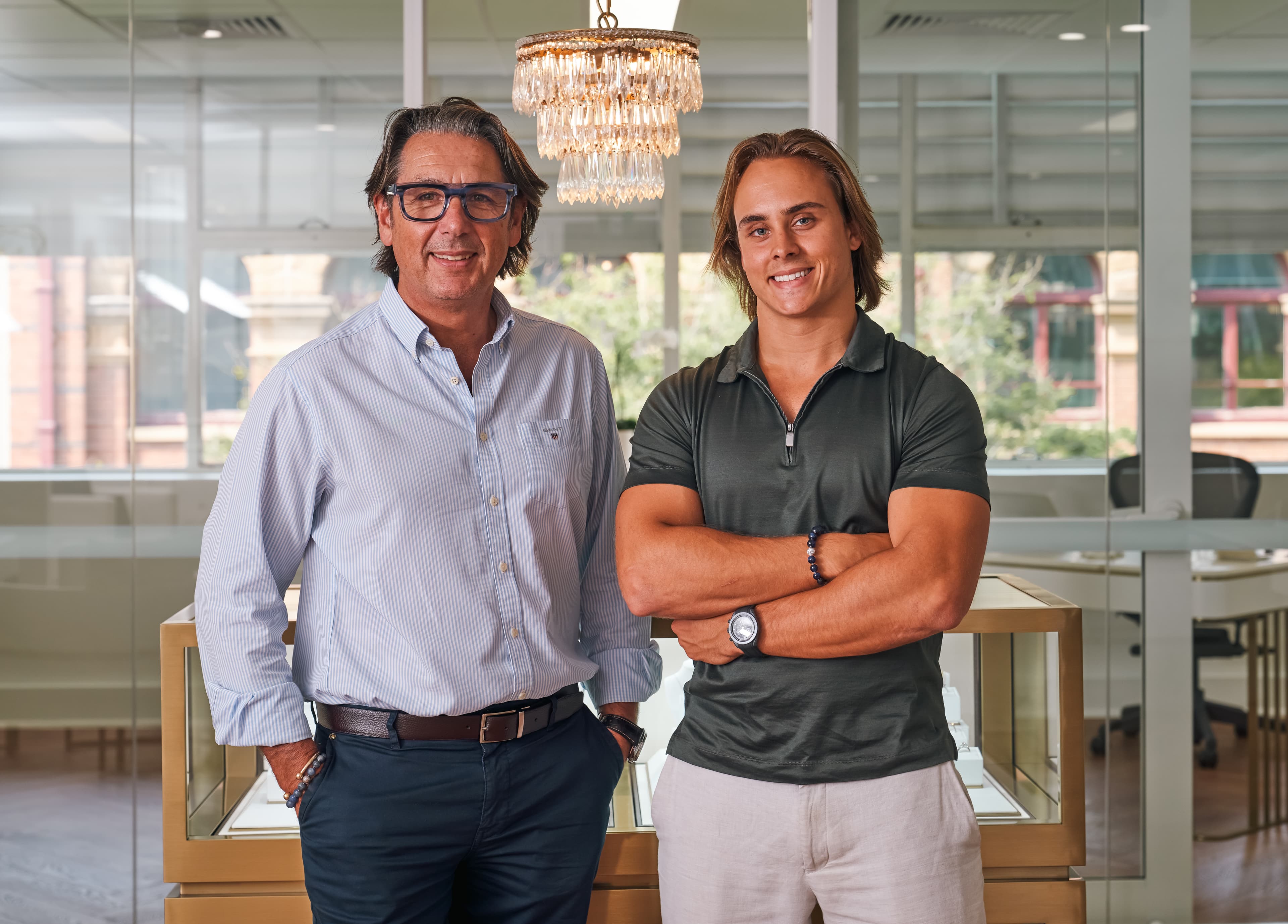
Nick Ireland and son Zac Ireland at their Brisbane showroom

Editorial

Digital detox: for these execs winter’s the perfect time to switch off

By Max Reynolds

25 June 2026

Nick Ireland relishes his work as one of Australia’s leading jewellers. Even so, the diamond retailer says it’s critical, from time to time, to get away from the office for a digital detox. Winter is the ideal time to escape devices, and the cold, for the European summer, he says.   Nick Ireland likes to head to Europe to recharge Brisbane-based Ireland says staying off the phone and email on vacation helps “catching up with my family and having some down time visiting new places." “It’s a great break and gives a new lease of life for the July 1 start for a new financial year,” he says. “A large amount of our time is spent not only making fabulous jewellery but with our website developer, SEO team, and marketing team as well as brainstorming, discussing and implementing new ideas." “So the downtime experienced in June from both day to day physical work and being away from major IT decisions is a welcome reprieve to which I feel completely rejuvenated when I return.” It’s a bonus, he says, that the studio’s operations can be left “in the capable hands of my son Zac”, allowing time off with “no phone, nice long walks on the beach with our dogs and a swim of course.” Ireland and son Zac Ireland at their Brisbane showroom   Tailoring a digital detox to personal circumstances is one of the big keys to success, says Jamieson Private Wealth founder Alex Jamieson. The Melbourne-based financial planner, who likes to escape the city with family and no devices, often times his winter digital detox with the Kings Birthday long weekend. A big upside is that the timing aligns with wider community expectations of less communication over the three-day public holiday, he says.   Alex Jamieson sees gains from digital detoxes   “To some degree a three-day weekend to reset yourself is something I’ve developed over quite some time, and it’s a really valuable trait to have,” he says. There’s “a culturally alignment” on taking some time off, meaning “there’s the expectation that you’re probably not going to be around to answer stuff.” Even so, he concedes that it can be tough to find the time to down digital tools in a fast-paced and demanding sector like financial services. “For me personally because of the intense type of work that we do the ability to disengage and recharge in more micro settings, as opposed to ‘I need to go away to an ashram for a week’ is an actual skill to develop,” he says. “It’s something more paramount because you’re building those abilities to get away for those periods to disconnect.” Jamieson makes time to get away from screens   At the same time, he urges executives keen for a break to ensure they’re clear on expectations before shutting off tech, even for just a few days. This includes handing over duties to key staff and not relying on a basic out of office email. “The level of being wired in is being amplified on the back of community expectations and so you have to create a more constructive period of time where you put the phone down, turn off and walk away from it,” he says. Jack Kapoor, CEO of Sydney-based Agile Energy, also keeps it brief when digital detoxing. “I wouldn't say I'm someone who disappears onto a farm for two weeks with a journal and a yoga mat,” Kapoor says. “My version of a digital detox is getting completely absorbed in something that has nothing to do with notifications, emails or energy contracts." "Usually that means spending time with family, getting out with mates, travelling, enjoying a long lunch, or opening a good bottle of wine from the cellar.” To enforce digital downtime, he often heads somewhere with bad phone reception. “If I'm lucky enough to get away, somewhere with poor phone reception is surprisingly effective,” he says. “It's amazing how quickly you realise the world keeps turning even when you don't answer an email for a few hours." He points to winter, and especially the end of the financial year, as a perfect time to reset, offering a chance to reassess priorities and clear “digital clutter” built up since January. That’s essential, he says, given how much digital correspondence accumulates daily. “As a founder and CEO, my day is effectively a constant stream of information,” he says. “Emails, Teams messages, WhatsApp, calls, market updates, board papers, financial reports and now AI tools that can generate answers, reports and analysis in seconds. Technology has become incredibly good at demanding our attention. The challenge today isn't accessing information—it's filtering it.” For Kapoor, the upside of a winter digital detox makes it worth the time, pointing to key gains on creative thinking and out-of-the-box solutions. “The most valuable ideas rarely arrive while you're responding to your 127th email of the day. They arrive when your mind finally has room to wander." “One thing I've learned in business is that when you're too close to a process, you stop seeing its flaws. The same applies to technology and AI. We become so focused on using the tools that we rarely stop and ask whether we're using them effectively.” “Sometimes the most productive thing a leader can do is spend an hour with no screen, no notifications and no AI prompts—just thinking,” he adds. The comments fit with recent research into the benefits of digital detoxes. For instance, a landmark 2024 study in US-based medical science journal Cureus found that many of those who take time off from screens and devices made positive lifestyle changes and achieved health-related outcomes. These were maintained after the detox ended. “The notion of 'digital detox' is gaining popularity as a means to combat technological anxiety and its effects on both happiness and performance,” the research found. While some people have initial apprehensions, many end up enjoying the process, according to the research, which highlights the importance of a personalised approach.
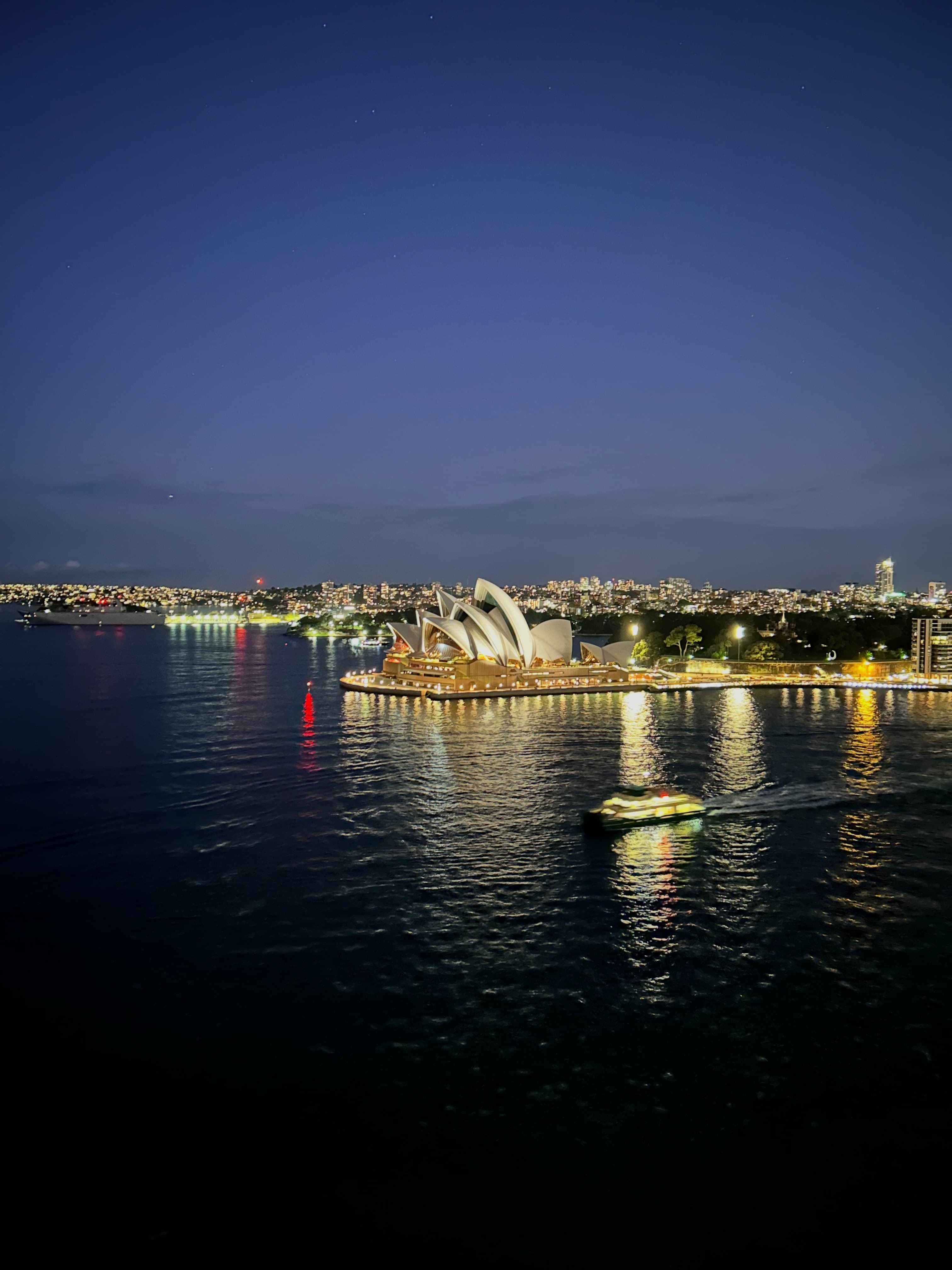
Sydney Opera House at night

Editorial

6 of the Most Luxurious 5-Star Hotels in Sydney to Check Into in 2026

By Alex Keshen

6 April 2026

From sunrises over the Opera House to sunsets across Sydney Harbour, be treated to unbelievable views and unrivalled luxury from these 5-star Sydney hotels. There’s dozens of properties in the city that fit into the 5-star category, but not all are equal. These award-winning stays don’t just offer high-quality sheets and welcoming service, but amenities like hatted restaurants, complimentary transfers around the city, rooftop pools and afternoon tea service. Five of the six hotels we’re recommending here are even listed in the Michelin Guide, the ultimate in food and accommodation accolades. So if you’re looking for the perfect Sydney stay, consider one of these hotels. Best 5-star hotels in Sydney Capella Sydney Address: 24 Loftus St, Sydney (CBD) Distance from Bankstown Airport: 33km Views from rooms: City, Harbour Facilities: Auriga Wellness spa, restaurants including Brasserie 1930, McRae Bar and Aperture, heated swimming and vitality pools, fitness centre, complimentary clothing pressing The Singapore-based luxury hotel chain opened its first Australian outpost in 2023 and certainly upped the game for 5-star hotels in Sydney. Housed in the historic, sandstone Department of Education building in the CBD, the Capella Sydney was named the Best City Hotel in Australia by Travel + Leisure in 2025.  Its prime location in the city centre is perfect for business travellers and leisure tourists alike; the property sits between Martin Place and Circular Quay. While the Capella’s facade dates back to 1912, the rooms offer contemporary sophistication. Its four Prestige Suites span more floor space than many inner-city apartments, come with marble finishes, oversized tubs and offer teaser views of the Harbour Bridge. Not only is the hotel award-winning, but its facilities are too. Featuring dishes with Australia’s best produce with an Italian twist, Brasserie 1930 has also received accolades for its food and wine. Rooms from $920 per night Website: https://capellahotels.com/en/capella-sydney  The Fullerton Hotel Sydney Address: 1 Martin Pl, Sydney (Martin Place) Distance from Bankstown Airport: 33km Views from rooms: Martin Place Facilities: Restaurants, including The Bar and The Place and meeting facilities, including ballrooms and conference spaces. Located in the historic, 151-year-old General Post Office building, the Fullerton brings another touch of Singaporean elegance to Sydney. Incredibly well situated for business travel, the 5-star hotel sits right at the intersection of George Street and Martin Place. Formerly a Westin, the hotel went through a complete renovation and transformation in 2019 to restore the historic GPO to its former glory and update the rooms to elevate them for a Fullerton-worthy guest. After all, this was the first location outside of Singapore and it needed to shine. Inside, guests will be treated to restaurants where Australia meets Southeast Asia and an iconic afternoon tea is served. Although coming in at a lower price point than other 5-star Sydney hotels, the Fullerton still delivers an elegant stay and was named Australia’s Leading Luxury Hotel at the 2024 World Travel Awards. Rooms from $311 per night Website: https://www.fullertonhotels.com/fullerton-hotel-sydney Image of side facade of Fullerton Hotel Sydney Park Hyatt Address: 7 Hickson Rd, The Rocks (The Rocks) Distance from Bankstown Airport: 33km Facilities: Rooftop pool and terrace, restaurants including The Dining Room and The Living Room, spa with treatment rooms and steam rooms, fitness centre, meeting and events spaces Views: Sydney Harbour, the CBD and Sydney Opera House Hotel locations don’t get any better than this. Perched on the edge of Sydney Harbour between the Opera House and the Harbour Bridge, the Park Hyatt Sydney boasts some of the best views from its rooms out of any other Sydney hotel. Maybe even out of any other Australian hotel. But the 5-star property offers much more than just an unbeatable location overlooking Sydney Harbour. Above the building guests will find an exclusive rooftop pool and on the ground floor, elegant dining rooms open for all meals of the day and an afternoon tea service. Most rooms feature harbour views, with either the city or Opera House in the background. (Tip: Although very spacious, the 1 King Bed Deluxe rooms are the only rooms to not feature water views.). No matter which suite you book though, you’ll be treated to Le Labo amenities, rain showers and even heated toilets. Rooms from $1,163 per night Website: https://www.hyatt.com/park-hyatt/en-US/sydph-park-hyatt-sydney  Inside Park Hyatt during Vivid Sydney Crown Towers Sydney Address: 1 Barangaroo Ave, Barangaroo NSW 2000 (Barangaroo) Distance from Bankstown Airport: 32km Facilities: Spa, and restaurants including Views: Darling Harbour, Barangaroo, Sydney Harbour,  The crowning jewel of Barangaroo, the soaring Crown Towers’ prominent appearance on the skyline guarantee incredible views from most of its rooms. But if views alone don’t cut it for you, consider a villa suite, complete with a dedicated butler and, if you book the Crown Presidential Villa, a sprawling 820sqm of space on the 88th floor with a private infinity pool. Central to Barangaroo and the CBD via Wynyard Walk, the Crown is much more than just a luxury hotel, the Crown is a complex that’s packed with facilities. Golden Century, A’Mare, Nobu and Epicurean are just some of the dining options here, and between meals guests can try their luck in the casino, or relax in the rooftop pool overlooking Darling Harbour and over to Pyrmon. Rooms from $699 per night Website: https://www.crownhotels.com.au/sydney/crown-towers  W Sydney Address: 31 Wheat Rd, Sydney NSW 2000 (Darling Harbour) Distance from Bankstown Airport: 31km Facilities: The AWAY Spa, Rooftop pool, dining venues including BTWN, The Living Room and 29/30 Rooftop Bar, meetings and events spaces Views: Darling Harbour, City If you’re looking for a 5-star stay that truly feels like a getaway, the W Sydney has plenty of resort-like amenities. The AWAY Spa and Wet Lounge offer a plethora of indulging treatments, while the Wet Deck on Level 29 features a 30m pool with some of the best views in the city. Known for its eclectic-chic suites, the W Sydney opened in late-2023 in an architecturally  unique building that towers over the southern end of Darling Harbour. With traditional hotel rooms and long-stay studios, the colourful rooms are anything but ordinary. Just a few years into its running, the hotel is shortlisted for the 2026 Travel + Leisure Best City Hotel in Australia. Rooms from $323 per night Website: https://www.marriott.com/en-us/hotels/sydwh-w-sydney  W Hotel Sydney from Tumbalong Park The EVE Address: 8 Baptist St, Redfern NSW 2016 (Redfern) Distance from Bankstown Airport: 26km Facilities: Rooftop pool Views: Urban landscapes, Western sunsets While just outside the city centre, The EVE exudes cool. On the border of Redfern and Surry Hills, it’s on the doorstep of Sydney’s chicest bars and restaurants while being just minutes from the CBD. In fact, right in the building sit restaurant and mezcaleria Lottie, Greek Island-inspired Olympus Dining and street food-forward Island Radio. Awarded one Michelin key for its accommodation, each room at The EVE offers a warm-and-cosy aesthetic, with some featuring private courtyards. Book the Sunset or EVE suite and you’ll get complimentary transfers around town or to the airport in a Range Rover Sport.  Rooms from $529 per night Website: https://theevehotel.com.au/
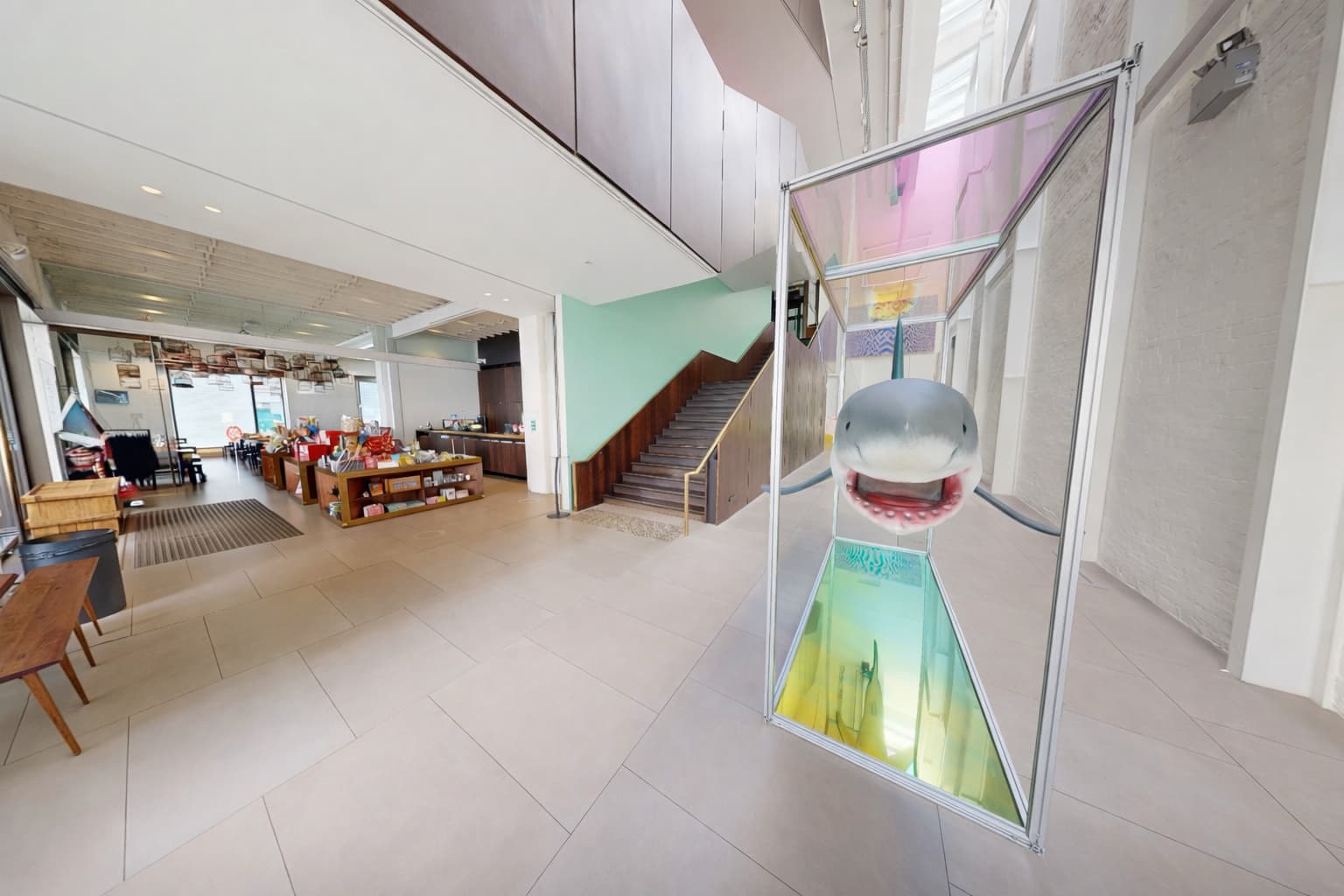
Lobby of White Rabbit Gallery in Sydney

Editorial

Flying Private Sydney to Melbourne: How To Spend Your 120 Saved Minutes

By Jasmine Gruber

3 March 2026

For many Australians, the Sydney-Melbourne route isn’t just an occasional trip; it’s a routine. Board meetings, client dinners, weekend visits, or simply maintaining a presence in the two cities means the journey quickly becomes part of everyday life. However, anyone who flies the route regularly knows the hidden cost isn’t in the flight itself; it’s in everything surrounding it—the queues at check-in, the crowded security lines, and the waiting at the gate. Over time, those small delays accumulate into hours lost between departures and arrivals. In a world that rarely slows down, time has quietly become the real luxury. What if the journey between Sydney and Melbourne didn’t take time away from your day, but gave some of it back? While flying private seems out of reach for most, it can be achieved at a fraction of the cost. Black Jet offers unlimited private flying between Sydney and Melbourne for less than half the cost of a traditional one-way private jet charter.  So, if you had the chance to save two hours on a round trip and spend it focusing on business, leisure or both, would you take it?  For frequent travellers of this route, flying private isn’t just about comfort anymore. It’s about reclaiming control of your time.   Where the 120 Minutes Come From Have you ever heard the pilot on commercial flights say, “With the wind, we’ll be landing 20 minutes ahead of schedule”?  When flying private, you save a lot more time, and that’s not in the air; it’s saved on the ground. For a standard commercial flight, you have to get to the airport at least two hours before your departure. During those two hours, you have to walk through congested terminals, wait in long security lines, and sit at the gate before boarding. And, when you land, you have to wait yet again to disembark.  When flying private with Black Jet, you only have to arrive 15 minutes before departure. Once there, you can glide through the airport in minutes and unwind in a private lounge with no queues, no security lines and no drawn-out boarding.    Reinvest Your Time in Sydney or Melbourne Two uninterrupted hours can change the tone of an entire trip, whether it’s for business or pleasure. Instead of compressing meetings, rushing meals or watching the clock before heading to the airport, you can expand the moments that actually matter.  In cities like Sydney and Melbourne, where pace and pressure are constants, the ability to arrive relaxed, stay longer and leave on your own terms transforms a routine commute into something more enjoyable. So, here’s how you can spend your extra 120 minutes in Sydney and Melbourne by flying private round-trip.   Sydney As Australia's largest city, Sydney is constantly moving at a fast pace. Full of tourists and locals alike, the city is always buzzing with energy and excitement. However, for busy professionals or those who like to move at a slower pace, here are some alternative ways to spend your extra 120 minutes in Sydney when you choose to fly private.   Harbour Reset at Balmoral Do you have a midday board meeting before hopping on your flight to Melbourne? Spend the morning at Balmoral Beach. Although close to the CBD, Balmoral is a tranquil place to spend the morning swimming, walking and indulging in coffee with your phone on silent mode. These two uninterrupted hours by the water can help not only reset your body but also your mind, so you’re prepared for the meeting and can land your pitch perfectly.   Visit One Gallery - Properly Sydney is home to over 100 museums, galleries and exhibitions. If you’re interested in history or art, take the time to visit and explore one in depth. Instead of racing through an art gallery like many people do, spend those extra 120 minutes slowly wandering around, taking each piece of art in and reflecting on how it makes you feel. Although the Art Gallery of New South Wales may be one of the biggest galleries in Sydney, some smaller and more underrated galleries to visit include White Rabbit Gallery, Wentworth Aboriginal Art, and Shazia Imran Gallery. White Rabbit Gallery at 30 Balfour Street Chippendale NSW 2008 Wentworth Galleries featuring Australia’s contemporary and Indigenous art at 175 Pitt Street Sydney 2000 Take a Ferry That Isn’t Solely for Transport Have you ever taken a ferry in Sydney that wasn’t solely a means of transport? Instead of seeing all of the famous sights in Sydney full of people, why not spend a couple of hours exploring Sydney by sea? The Circular Quay to Manly ferry is one of the most quintessential journeys in the city, thanks to the breathtaking views it offers. Although only a 20-30 minute ride, the route takes you past the Harbour Bridge, Sydney Opera House and Taronga Zoo. Along the way, you can sit back, switch off, and marvel at the views. For a longer journey, why not hop on the RiverCat and journey to Parramatta? Following the Parramatta River through changing landscapes, this ferry ride offers iconic harbour views to historic riverside suburbs and serene mangroves.   Melbourne When flying private between Melbourne and Sydney, the 120 minutes you save on skipping congested terminals, security lines and long boarding processes means you can spend more time doing what you love in Melbourne. Whether you want to utilise those two hours preparing for a meeting, focusing on your physical health or discovering new parts of the city, here are three things you can do in Melbourne.   Walk Yarra Bend If you’ve been in Melbourne for business and want a chance to step back from the hustle and bustle of the city, why not walk the Yarra Bend? Two hours in bushland that’s just ten minutes from the CBD feels almost improbable, and that’s exactly the point. The loop trails through Yarra Bend offer space to think without interruption, where the only noise is the gravel beneath your feet and the river moving quietly below. For those who make business decisions all day, solitude this close to the city is rare, and a great way to spend those 120 minutes you save flying private.   Arrive Early for Dinner and Sit at the Bar Instead of arriving exactly on time to meet friends or potential clients for dinner, arrive early and take a seat at the bar. Melbourne is renowned for its incredible food scene, but enjoying the atmosphere and people watching is also part of the charm. Sit back, relax and watch the lighting dim, the first bottles uncorked, and the hum of voices filling the air.   Ride Along the Capital City Trail Do you feel like getting in some exercise before your flight? With the two hours you save flying private, you can explore the city on two wheels. If you want to experience the city quickly but without taxis or traffic, hire a bike and follow a section of the Capital City Trail along the Yarra River. In under two hours, you can pass through parklands, riverside suburbs and quiet bridges that most visitors never encounter.   Black Jet Unlimited Flying Membership For those who move frequently between Sydney and Melbourne and are tired of maneuvering through busy airports, waiting in long security lines and delays, flying private is the best way to save your valuable time. On average, flying private on a round trip between Sydney and Melbourne saves 120 minutes, which you can use preparing for meetings, catching up with friends or clearing your mind in nature. With Black Jet’s unlimited flying membership, the journey itself becomes simpler, faster, and far more flexible. Are you ready to spend less time in airports and more time where it matters?

©2026 Black Jet Mobility Pty Ltd
Back
Return home